With your permission we measure how the site is used and show content from other services: Google Maps, YouTube, Spotify. Accept or reject all of it, or choose in your preferences. You can change this at any time from Privacy preferences at the foot of every page. Privacy policy
To generate a space for dialogue and reflection on the democratization of care work as a transforming axis of society from the private sphere, the responsibility of the state and the community, with a feminist approach and participatory masculinities.
This case study on Cambodia enhances ESCAP’s technical and advisory assistance to its member States, in particular aligning with the ASEAN region’s efforts to bring care to the centre of public policy. The ASEAN Comprehensive Framework on Care Economy was…
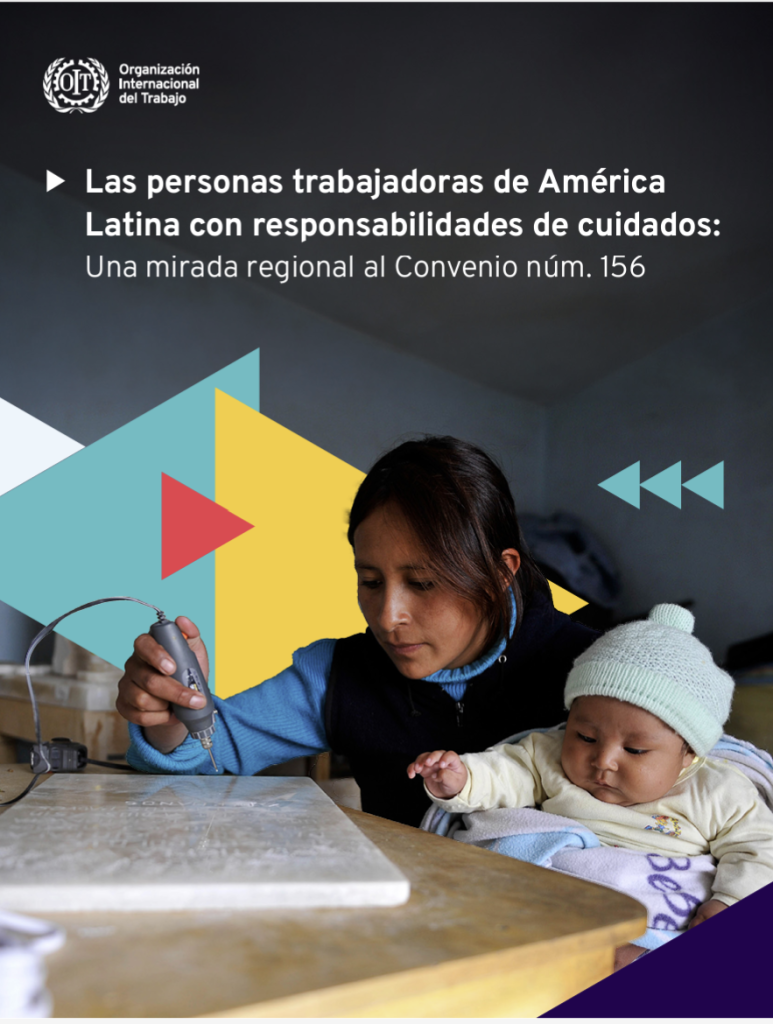
Analysing the intersection between gender, employment and care, the ILO presents a detailed report that calls for transformative action to redistribute care work around co-responsibility and social justice.
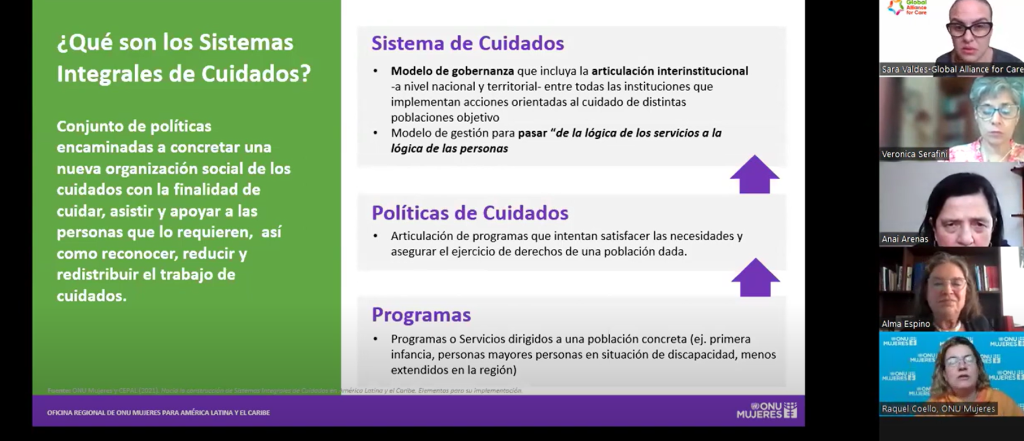
During the first session “The importance of care for women's rights”, held on February 21, 2024, the centrality of care and the importance of investing in this agenda from a macroeconomic perspective were discussed.Panelists: Alma Espino, Coordinator of the Development…
During the first session "The importance of care for women's rights", on February 21, 2024, the centrality of care and the importance of investing in this agenda from a macroeconomic perspective were discussed.Panelists: Alma Espino, Coordinator of the Development and…
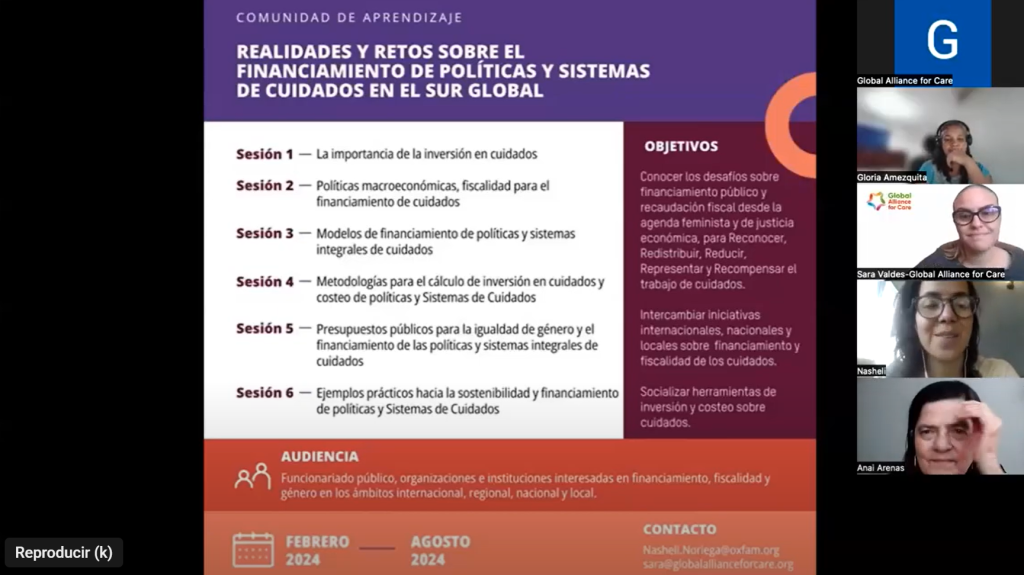
To promote the care agenda, the EU-LAC Foundation, through the EU-LAC International Women’s Network, in close collaboration with UN Women for the Americas and the Caribbean, the Economic Commission for Latin America and the Caribbean (ECLAC), the Global Alliance for…
To promote the care agenda, the EU-LAC Foundation, through the EU-LAC International Women’s Network, in close collaboration with UN Women for the Americas and the Caribbean, the Economic Commission for Latin America and the Caribbean (ECLAC), the Global Alliance for…
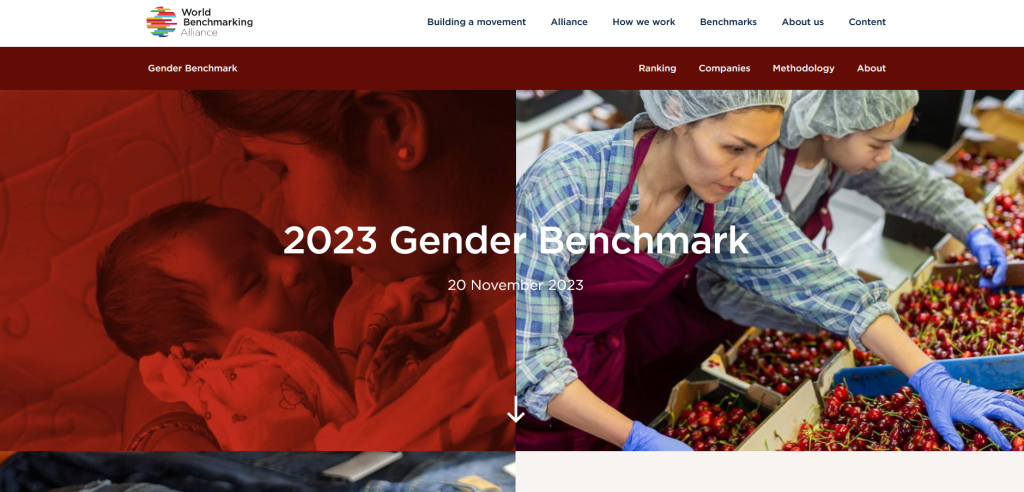
In this second iteration of the Gender Benchmark we rank 112 of the largest apparel and food and agriculture companies globally on their responsibility to drive and promote gender equality in their entire value chain. This is our second time…
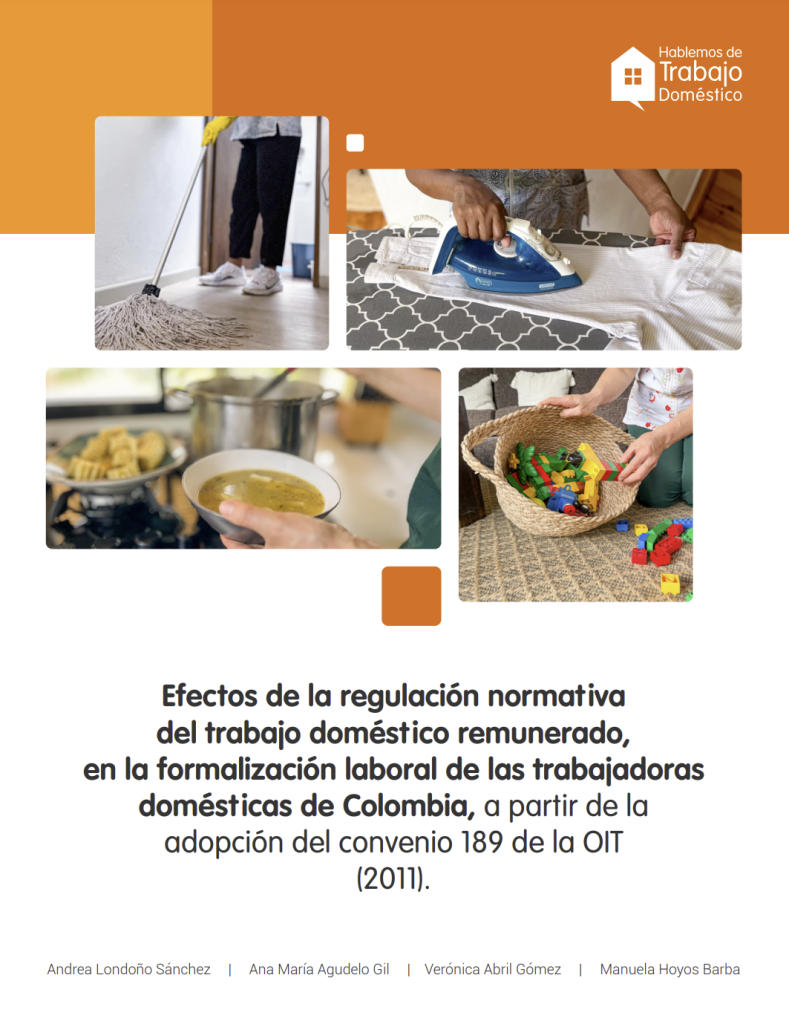
This study examines the effects of the normative regulation of paid domestic work on the labor formalization of domestic workers in Colombia, starting with the adoption of ILO Convention 189 (2011), taking as a reference that, by the year 2022,…
In 2021, the World Benchmarking Alliance (WBA) published our first Gender Benchmark, assessing 35 companies in the apparel sector. This year, we expanded our scope by assessing 1,006 companies that span 10 industries and more than 80 countries around the…
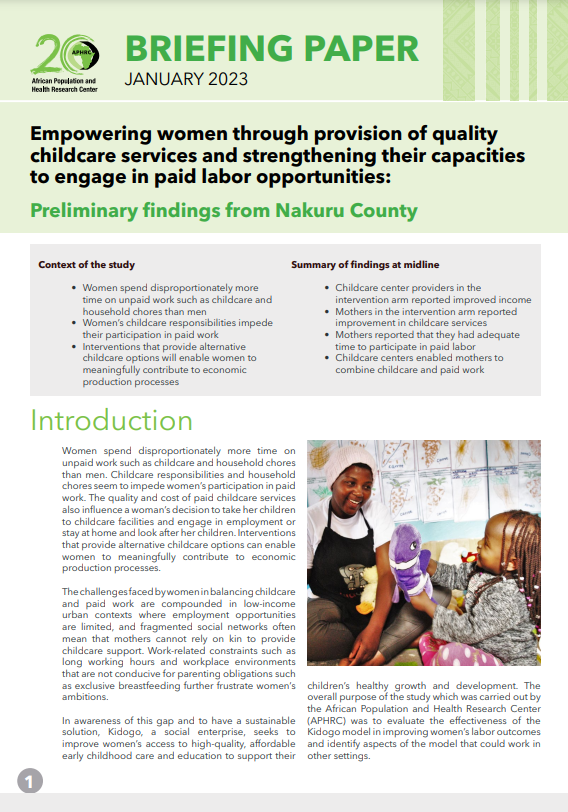
Women spend disproportionately more time onunpaid work such as childcare and household choresthan men. Childcare responsibilities and householdchores seem to impede women’s participation in paidwork. The quality and cost of paid childcare servicesalso influence a woman’s decision to take her…
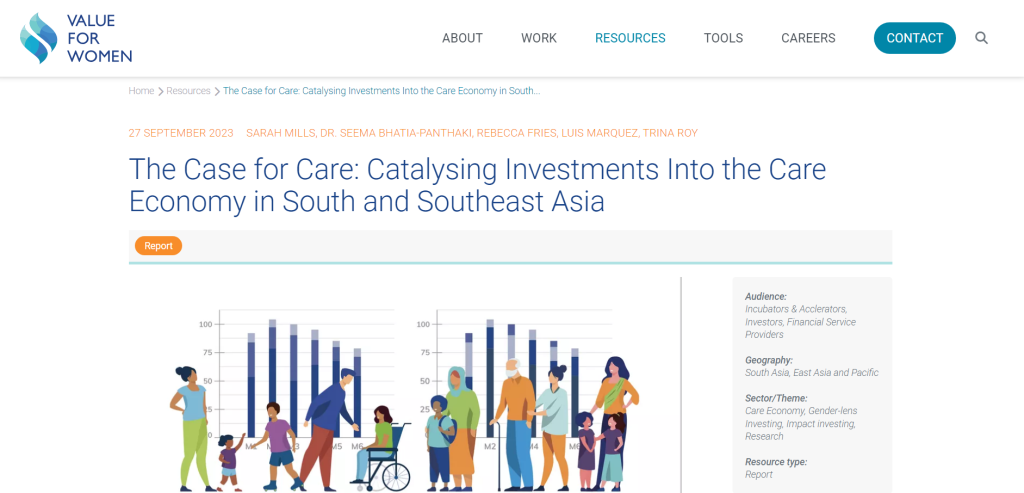
Across Asia and the Pacific, women perform more than four times the unpaid care work done by men, and this difference accelerated during the Covid-19 pandemic. Meanwhile, the market size and investment potential of the care sector is growing.This paper…
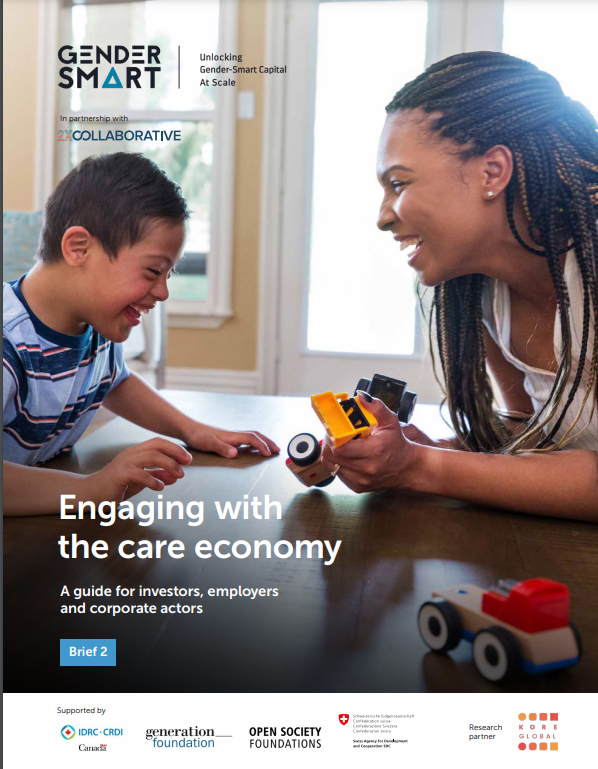
This brief builds on Brief 1 that sets the scene of what the care economy covers, thetypes of business models and challenges to overcome. This adjacent primer is targeted forinvestors, in both private and public markets, employers and corporate actors…
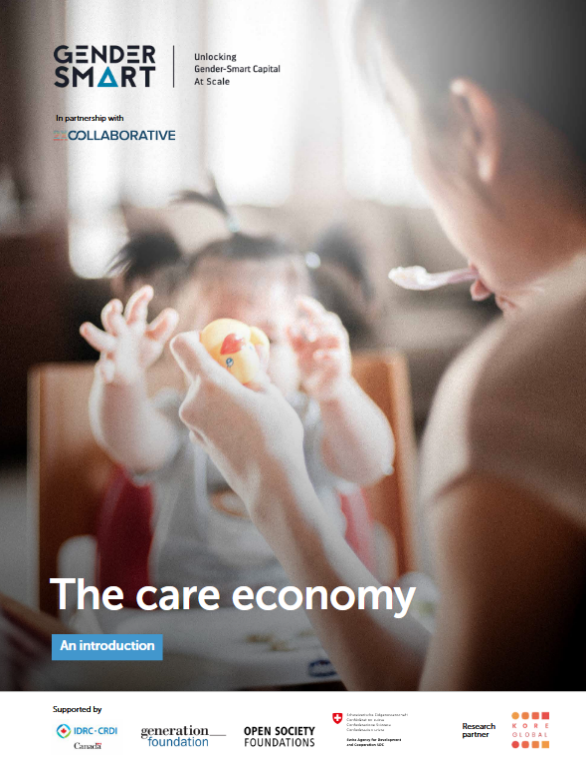
Care work underpins and drives economic, social and environmental wellbeing. It enables modern societies and economies to function. The global COVID-19 pandemic exposed the important yet precarious state of the world’s care infrastructure generally and the disastrous gendered consequences of…
• In 2021 the Carolina Foundation and UNRISD launched a polyphonic project focused on reflecting, in a situated and critical way, on some of the most pressing challenges of Latin American in relation to gender justice. After the Covid-19 pandemic,…
The pandemic exacerbated a reality that was already there, and consequently exposed what could no longer remain hidden. This is the key insight that unites the four think pieces in this mini-series which come from different geographical locations in Ibero-America…
WISE-R consists of six modules and training guides that aims at promoting workplace productivity through the improvement of working conditions.WISE-R Module 5 on Family-friendly measures will help you:1. To understand family responsibilities and their link with your business and productivity;2.…
Healthy pregnancies and healthy newborn children, combined with a measure of economic security, are an aspiration for all working mothers. Maternity protection at work supports this aspiration. Its goals are twofold: 1) to ensure that a woman’s economic activities do…