Reports
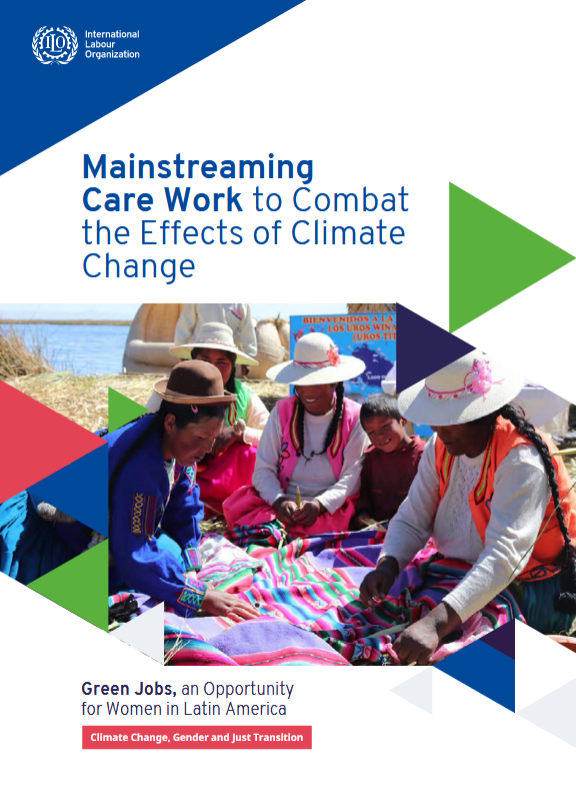
The work involved in caring for the planet and that of caring for people are closely linked. They are fundamental for the sustainability of life and essential for reproduction and social well-being. Care work ‒ both paid and unpaid ‒…
Reports
The work involved in caring for the planet and that of caring for people are closely linked. They are fundamental for the sustainability of life and essential for reproduction and social well-being. Care work ‒ both paid and unpaid ‒…
Audios
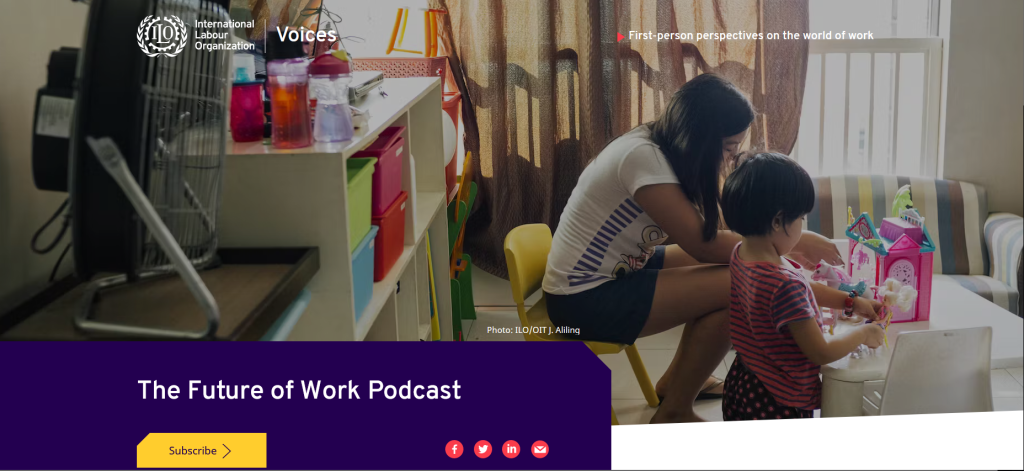
Many countries face a shortage of care workers. In an effort to rectify this some are reassessing the conditions, pay and status of these workers. Yet, too often, improvements exclude those classified as domestic workers, even though they often undertake…
Articles
WHO estimates that approximately two-thirds of people who achieve older age are likely to need care and support from others at some point. However, many health and social care systems around the world are currently unable to deliver long-term care…
Articles
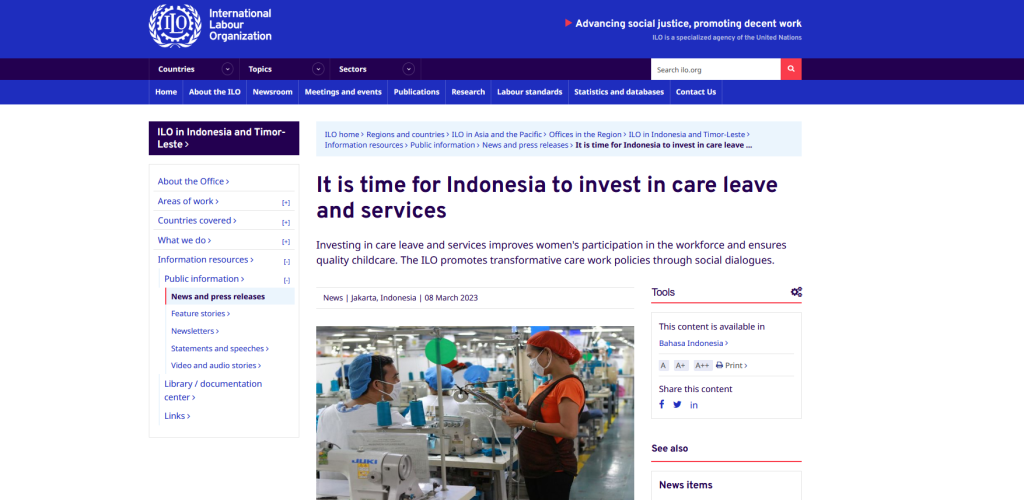
As a follow up to the G20 meeting held under the Presidency of Indonesia in 2022 on care economy, the ILO supported the initiative of the Indonesian government led by the Ministry of Women Empowerment and Child Protection to develop…
Articles
Women shoulder a disproportionate share of unpaid work around the world, and gender imbalances in the distribution of care work constitute a root cause of women’s economic and social disempowerment. To further discuss about the implications and consequences of policy…
Videos
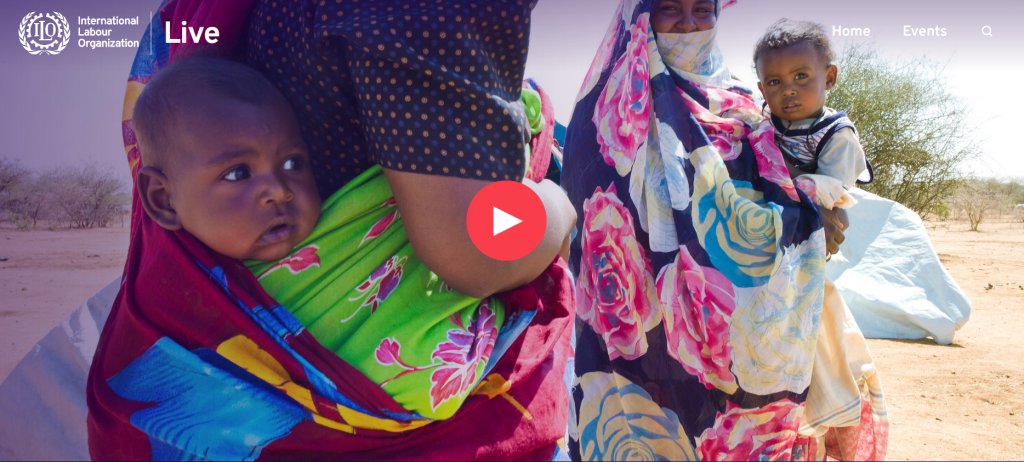
The ILO, with the support of the Bill & Melinda Gates Foundation, has developed the Care Policy Investment Simulator, the largest online care policy modelling tool that once launched will be available for the general public. Containing data from more…
Articles
ILO hopes these new tools will encourage the investment needed to support the two billion people still without adequate maternity and paternity support, parental leave and childcare services.
Articles
An Ibero-American symposium in Cartagena aims to identify challenges and opportunities for policy makers. The ILO Director-General joined Ministers of Labour from Latin America and Spain for Tuesday's virtual opening session.
Audios
The talkshow discusses about the care economy and a great involvement of women in the care economy. It is growing as the demand for childcare and care for the elderly is increasing in all regions. It will thus create a…
Reports
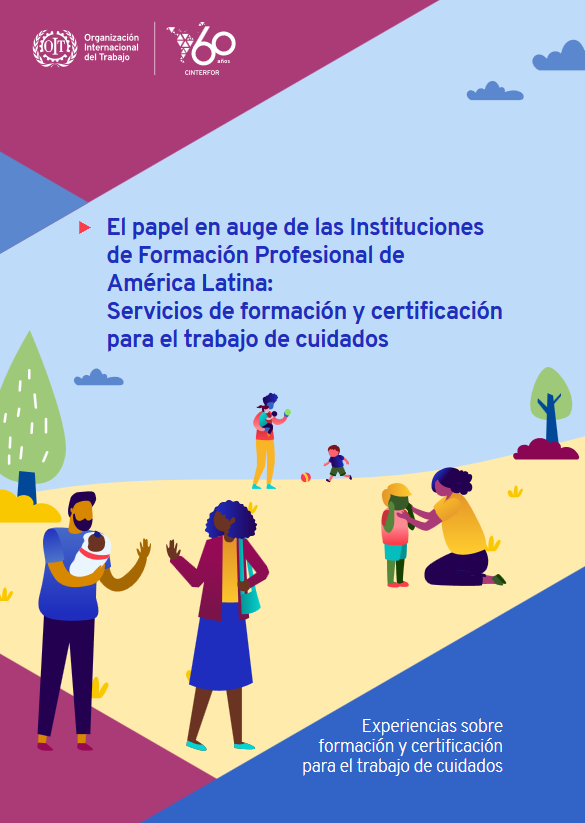
Every quality management and regulation system for the care of dependent persons defines criteria relating to the professional training of caregivers: content of training curricula, minimum qualification levels for access to certain occupations, duration of programs and hours of practice,…
Reports
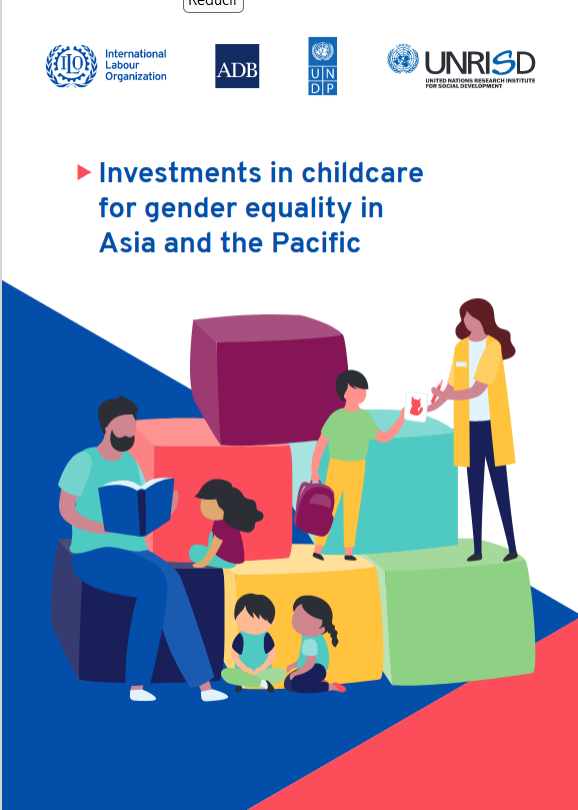
This is a study on the public provision of childcare across 48 economies in Asia and the Pacific through the lens of accessibility, affordability, quality, and decent work for childcare workers. Based on its findings the study offers recommendations for…
Reports
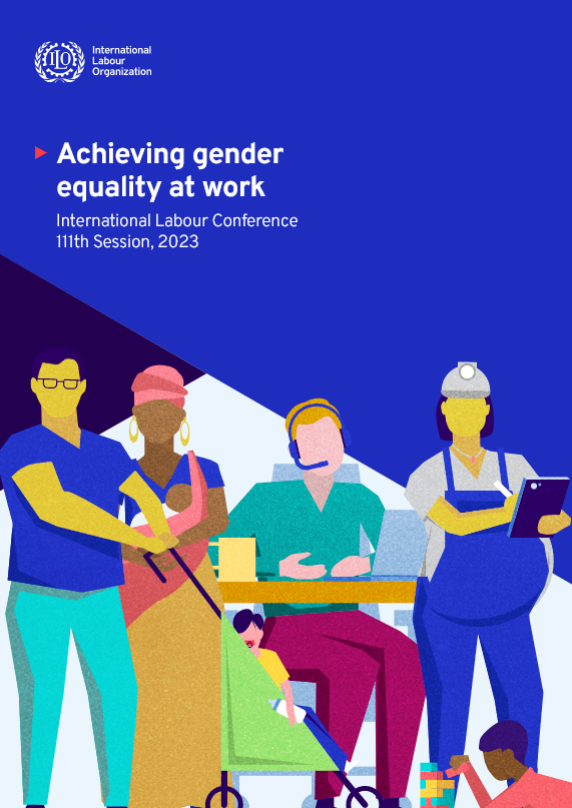
General Survey on the Discrimination (Employment and Occupation) Convention, 1958 (No. 111), the Workers with Family Responsibilities Convention, 1981 (No. 156), the Maternity Protection Convention, 2000 (No. 183), the Discrimination (Employment and Occupation) Recommendation, 1958 (No. 111), the Workers with…
Reports
This Technical Note provides guidance on how to use the online ILO Care Policy Investment Simulator by explaining the underlying methodology, calculations and results. The Simulator helps build tailor-made care policy investment packages to fill national gaps on care leave…
Articles
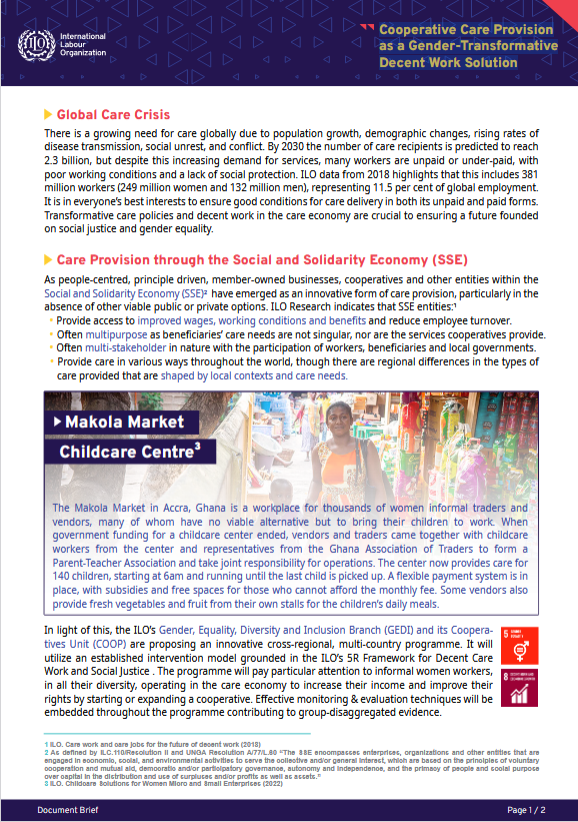
There is a growing need for care globally due to population growth, demographic changes, rising rates of disease transmission, social unrest, and conflict. By 2030 the number of care recipients is predicted to reach 2.3 billion, but despite this increasing…
Articles
The ILO launches its new report on care at work, highlighting the benefits of investing in care services and policies to alleviate poverty, encourage gender equality and support care for children and the elderly in Indonesia.
Articles
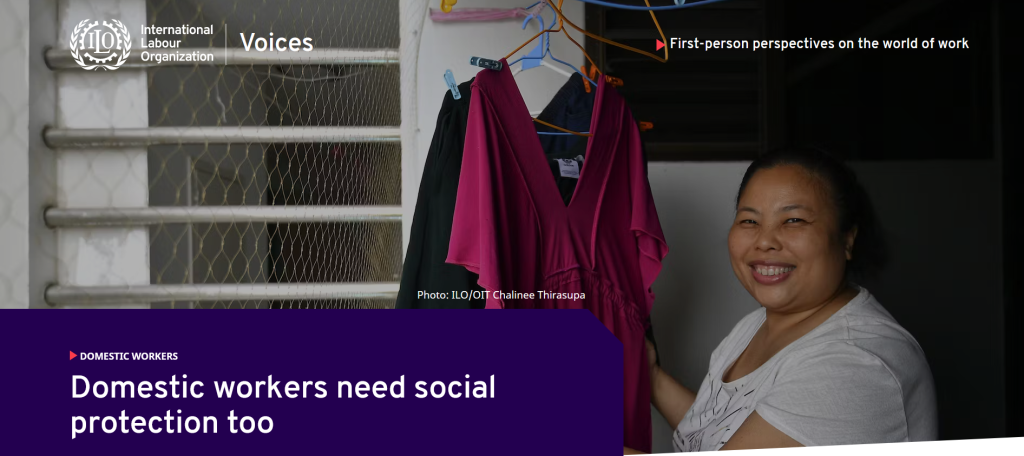
My name is Champa. I grew up in a village in Myanmar. When I was five years old my father died. I am the youngest of nine children, and as a daughter, I was the one who had to help…