With your permission we measure how the site is used and show content from other services: Google Maps, YouTube, Spotify. Accept or reject all of it, or choose in your preferences. You can change this at any time from Privacy preferences at the foot of every page. Privacy policy
This case study on Uzbekistan enhances ESCAP technical and advisory assistance to its member States, in particular aligning with the region’s efforts to bring care to the centre of public policy. The study aims to draw great attention and resources…
The commitments made over the last 45 years have led to the development of a robust Regional Gender Agenda in which women’s rights and gender equality are recognized as central and cross-cutting elements of all State action geared toward strengthening…
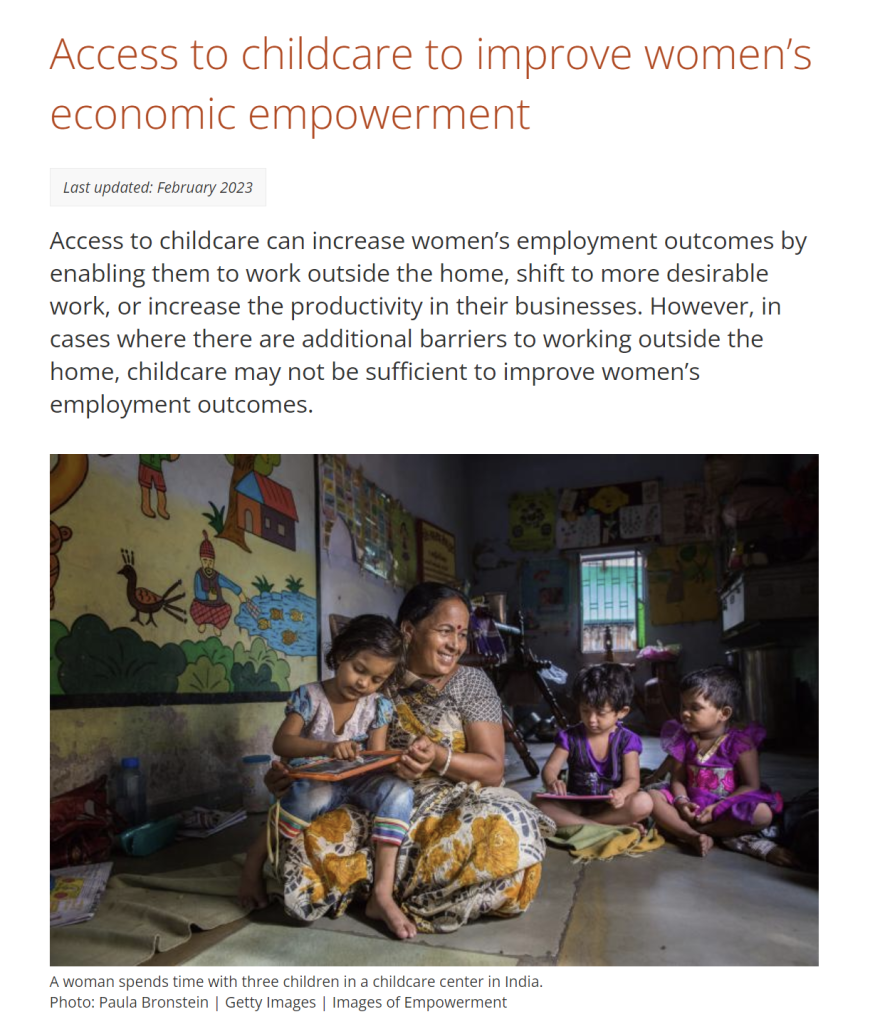
Access to childcare can increase women’s employment outcomes by enabling them to work outside the home, shift to more desirable work, or increase the productivity in their businesses. However, in cases where there are additional barriers to working outside the…
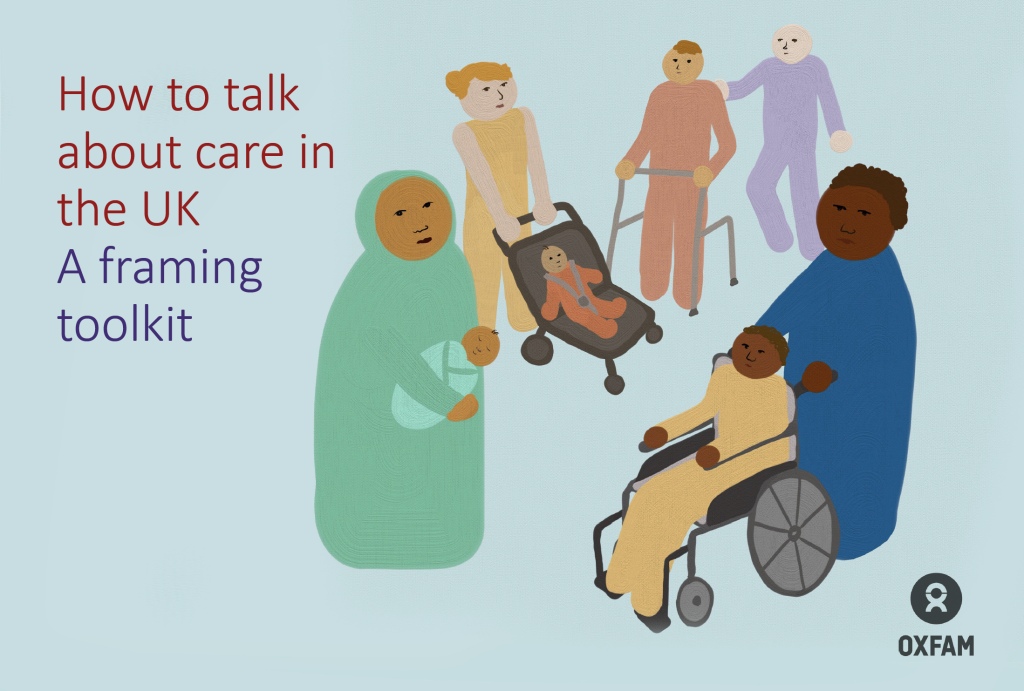
In this toolkit you will find some helpful recommendations and tools that can be used flexibly by anyone who wants to talk more effectively about the value of all care, paid and unpaid, to the UK general public.
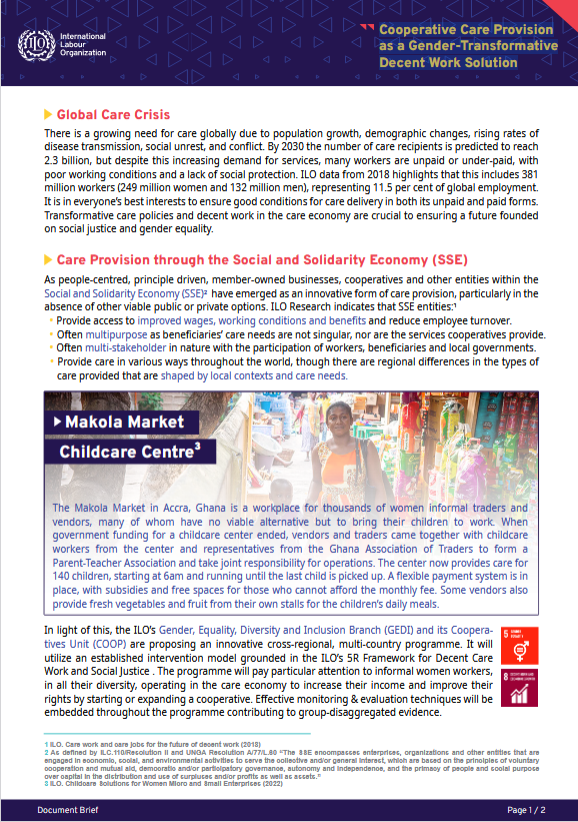
There is a growing need for care globally due to population growth, demographic changes, rising rates of disease transmission, social unrest, and conflict. By 2030 the number of care recipients is predicted to reach 2.3 billion, but despite this increasing…
This Technical Note provides guidance on how to use the online ILO Care Policy Investment Simulator by explaining the underlying methodology, calculations and results. The Simulator helps build tailor-made care policy investment packages to fill national gaps on care leave…
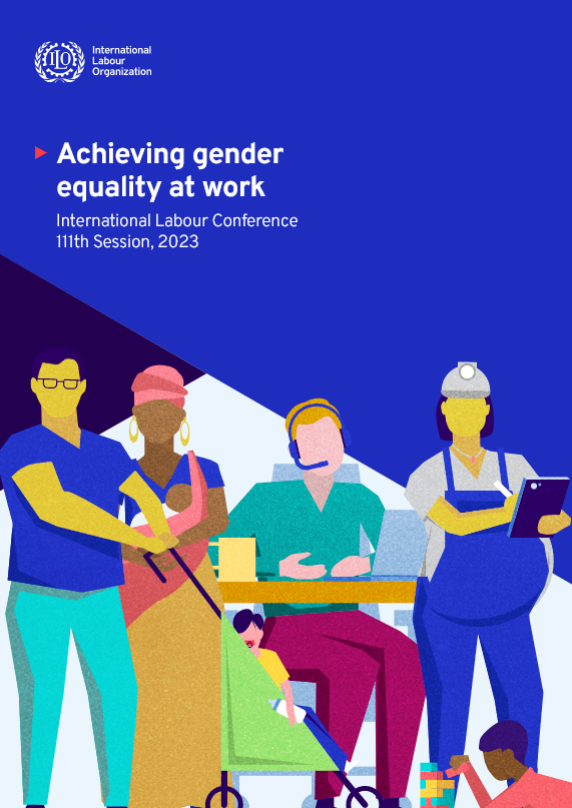
General Survey on the Discrimination (Employment and Occupation) Convention, 1958 (No. 111), the Workers with Family Responsibilities Convention, 1981 (No. 156), the Maternity Protection Convention, 2000 (No. 183), the Discrimination (Employment and Occupation) Recommendation, 1958 (No. 111), the Workers with…
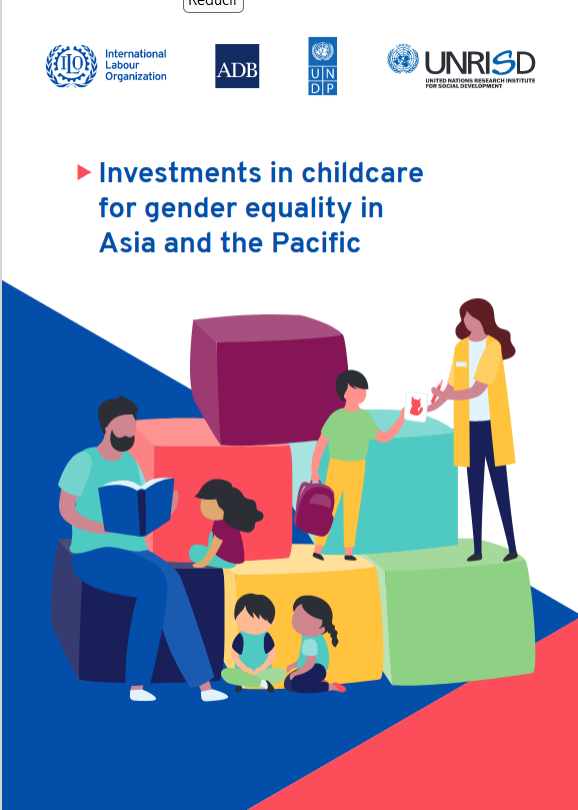
This is a study on the public provision of childcare across 48 economies in Asia and the Pacific through the lens of accessibility, affordability, quality, and decent work for childcare workers. Based on its findings the study offers recommendations for…
In recent years, ongoing conflicts and crises coupled with demographic changes have spurred the urgent need for policy action and financing to support a resilient and gender-transformative care economy. With rising childcare, eldercare, and/or disability care needs, the demand for…
We grassroots community caregivers and domestic workers, gathered at the Global Grassroots Women Community Caregivers Summit, from 28 to 30 June 2023 in Mexico City hereby call upon governments, international policy makers, philanthropies, civil society and private sector to join…
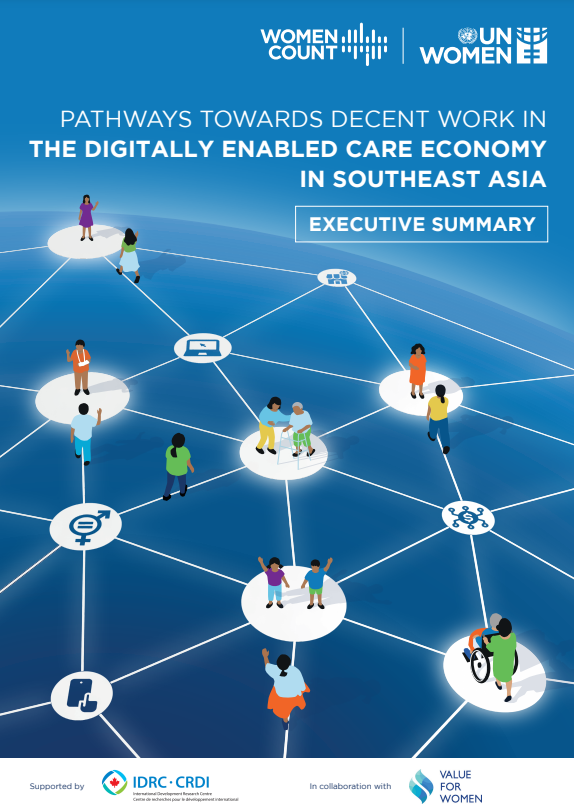
This publication examines emerging goodpractices of market-based models in the digitallyenabled care economy in Southeast Asia andidentifies pathways towards decent work for thepredominantly female workforce.The care economy entails the production andconsumption of goods and services necessary forthe physical, social, mental…
The transformation of societies and economies towards paradigms centred on interdependence, care, and sustainability is urgently needed. In this context, this working paper sheds light on emerging efforts to address women’s and girls’ unpaid care, domestic, and communal work in…
Halfway through the 2030 Agenda for Sustainable Development, the world is failing to achieve gender equality, making it an increasingly distant goal. The latest available data show that, despite the strong rhetoric, none of the United Nations’ Sustainable Development Goal…
This policy brief examines the low rate of female labour force participation in Asia and the Pacific and its correlation with persistent inequalities in the distribution of care responsibilities between men and women as well as the society and the…
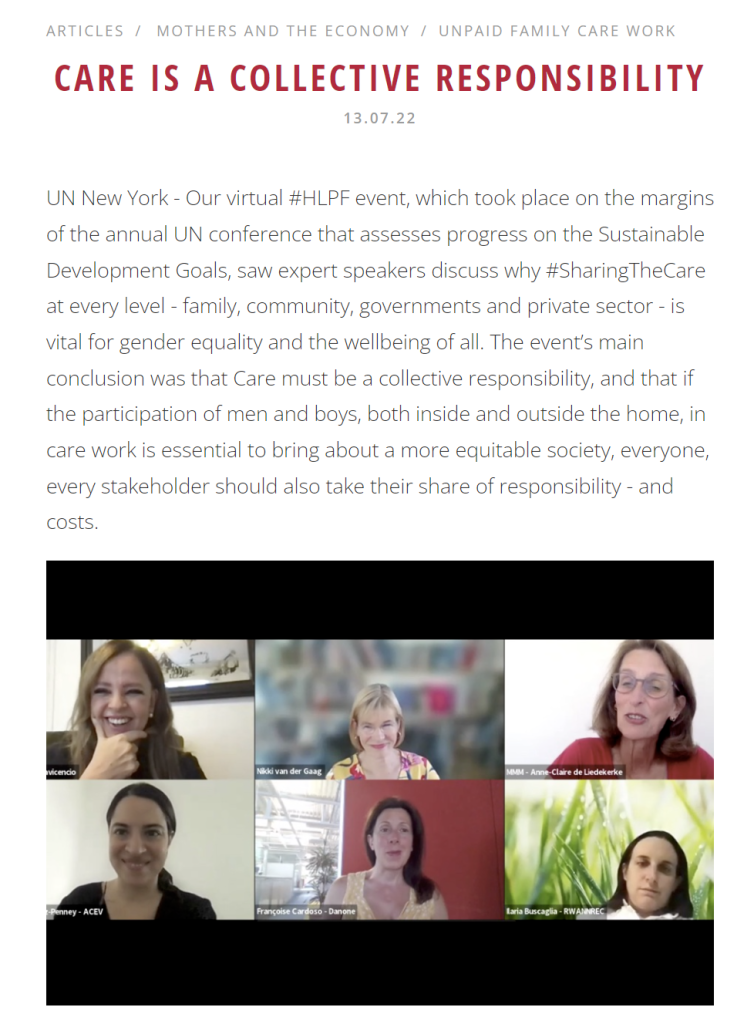
This virtual HLPF side-event saw expert speakers discuss why #SharingTheCare at every level - family, community, governments and private sector - is vital for gender equality and the wellbeing of all. The event’s main conclusion was that Care must be…
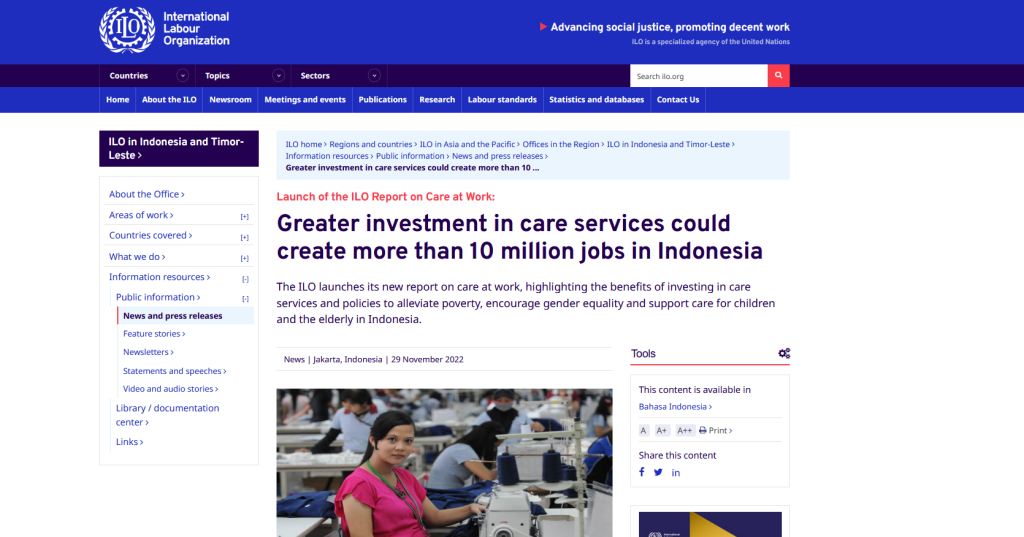
The ILO launches its new report on care at work, highlighting the benefits of investing in care services and policies to alleviate poverty, encourage gender equality and support care for children and the elderly in Indonesia.
The multiple crises of recent years have shown that the current development model is unsustainable and fails to address the structural gaps that affect the vast majority of the population of Latin America and the Caribbean.Against this backdrop, a comprehensive…
In Latin America and the Caribbean, care has gradually been placed at the centre of public agendas, albeit unevenly, as a result of growing political commitments, as well as the work of women’s movements and feminist economic studies. These contributions…